From Idolatry to Christ
Exodus 32 • Divine Calling and Human Dependency
When God Calls: Lessons from Exodus 32 on Divine Calling and Human Dependency

The Calling of Moses and the Flesh's Intrusion
When God called Moses at the burning bush (Exodus 3:1-4:17), He called him alone. Moses, diminishing himself below what God had called him to be, protested: I am not eloquent...I am slow of speech and of a slow tongue (Exodus 4:10). This self-deprecation led to a compromise that was never God's original plan. As a result, Aaron was appointed to speak for Moses: And he shall be thy spokesman unto the people: and he shall be, even he shall be to thee instead of a mouth, and thou shalt be to him instead of God (Exodus 4:16).
Though God graciously accommodated this arrangement and called Aaron as well (Exodus 4:14-15), the principle remains clear: God calls families, but His calling is specific to a person and does not require aid from the flesh. Moses switched back to reliance on human ability, thereby defeating God's perfect plan. Though Moses became powerful in ministry, he operated in God's permissive will rather than His perfect will. We must be careful not to frustrate God's plan by relying on the flesh instead of His divine enabling.
The Prevailing Predestination of Israel Despite Their Failure
Fast forward to Exodus 24-31: Moses was in the mountain receiving extraordinary instructions. God revealed the design for the Tabernacle (Exodus 25-27), the setup for worship (Exodus 28-30), and construction details (Exodus 31:1-11). He received the tables of the law, written by the finger of God Himself (Exodus 31:18). The instructions included magnificent details on the ordination of priests (Exodus 29), the burnt offering and sin offering (Leviticus 1-4, referenced in Exodus 29), and how to approach and minister unto the Lord (Exodus 28-30). So wonderful are the ways of the Lord!

Satan's Usurping: The Golden Calf
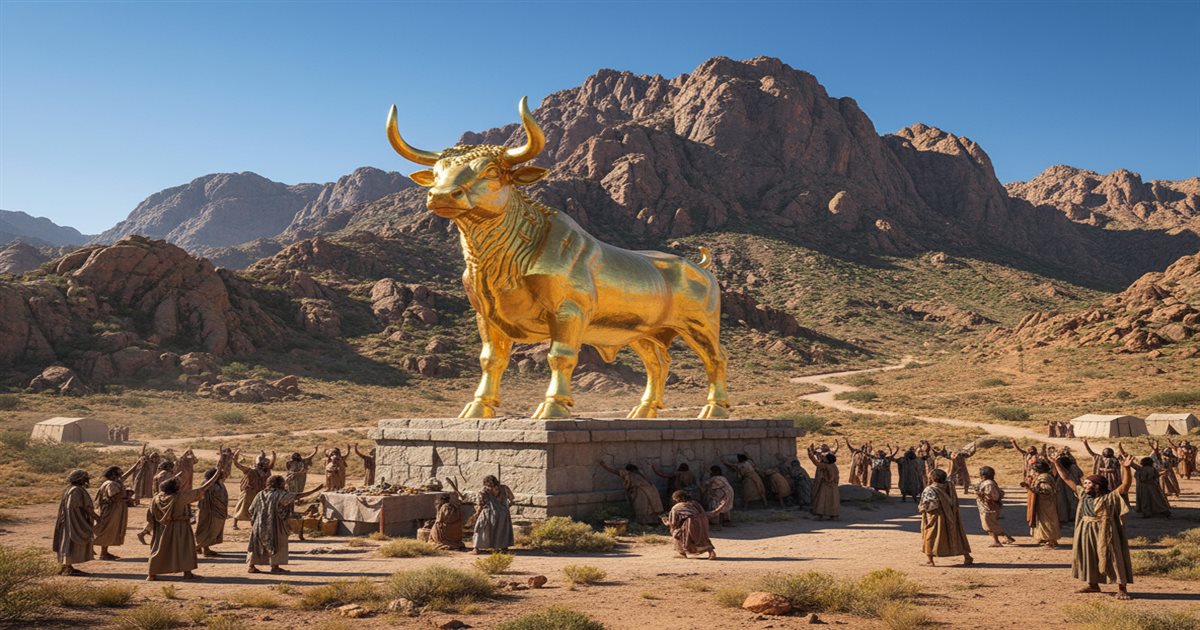
But while God was unveiling these glories, satan was orchestrating a usurpation in the camp below. The people grew impatient and said, As for this Moses, the man that brought us up out of the land of Egypt, we wot not what is become of him...make us gods, which shall go before us (Exodus 32:1). They needed a god to take them to Canaan, they claimed.
Aaron, who bore singular responsibility in Moses's absence, made a catastrophic decision alone. He ignored the counsel of peer elders like Hur, who had accompanied Moses, Aaron, and the seventy elders up the mountain and had seen God (Exodus 24:9-14). Moreover, in Exodus 18:25-26, seventy rulers had been appointed to judge Israel, yet Aaron never engaged these leaders when idolatry was being introduced.
Exodus 32:1And when the people saw that Moses delayed to come down out of the mount, the people gathered themselves together unto Aaron, and said unto him, Up, make us gods, which shall go before us; for as for this Moses, the man that brought us up out of the land of Egypt, we wot not what is become of him.
Where Were the Elders When Idolatry Was Introduced to Israel?

Lesson: Biblical Leadership is Plural
This teaches us a crucial principle: Too much power concentrated in one leader is dangerous. Biblical leadership is plural. Eldership is plural. No elder should direct affairs alone, no matter how anointed. Aaron should have been accountable to other leaders before taking any action.
Moses later put Aaron to account: What did this people unto thee, that thou hast brought so great a sin upon them? (Exodus 32:21). But it was too late—the damage was done. Leaders must be accountable before any action, not merely after the consequences unfold.
Moses failed God because his reliance on the flesh resulted in idolatry in Israel.
Romans 5:20Moreover the law entered, that the offence might abound. But where sin abounded, grace did much more abound.
Exodus 20:3-4Thou shalt have no other gods before me. Thou shalt not make unto thee any graven image, or any likeness of any thing that is in heaven above, or that is in the earth beneath, or that is in the water under the earth.

Where Sin Abounds, Grace Abounds Much More
Nevertheless, where sin abounded, grace did much more abound (Romans 5:20). Here is the stunning irony: While Aaron was building the golden calf idol and was mired in deep idolatry and betrayal of God's sovereign grace (Exodus 32:1-6), God was simultaneously showing Moses the calling of Aaron as high priest (Exodus 28-29). Did God not know what Aaron would do? Emphatically, He knew!
Yet God gave Moses the detailed ordination instructions for Aaron and his sons to serve as priests (Exodus 28:1-3, 29:1-37). God also gave Israel the Ten Commandments during this same period (Exodus 20:1-17; 31:18), including Thou shalt have no other gods before me and Thou shalt not make unto thee any graven image (Exodus 20:3-4)—the very commands Aaron and Israel were violating at the foot of the mountain.
Conclusion
God's grace transcends human failure. His purposes prevail despite our reliance on flesh, our poor decisions, and even our idolatry. The same Aaron who built the golden calf was ordained by God to minister in the holiest place. This is not a license for sin, but a testimony to the depth of God's redemptive plan and the riches of His grace.
Let us learn to walk in God's perfect will, trust His calling without leaning on our own understanding, embrace accountable plural leadership, and marvel at the grace that covers our failures while accomplishing His eternal purposes.