Ordination of the Priests
Exodus 29 • Christ Our Complete Offering
"Where the blood is applied, the anointing oil will follow." — The Central Revelation of Exodus 29
The ordination of Aaron and his sons reveals profound truths about our priesthood in Christ. This ceremony was not merely a ritual but a living picture of how we are constituted as priests unto God through the all-sufficient work of Christ. Every element — the washing, the garments, the blood, the oil — speaks of Christ and our union with Him.

I. The Washing in Water
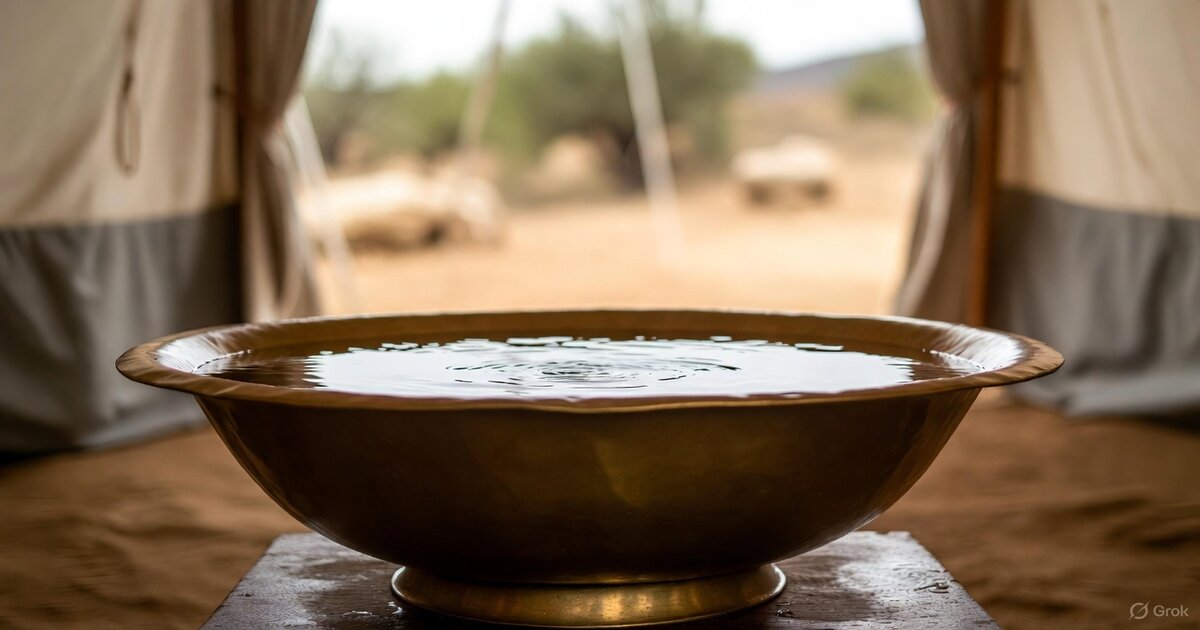
Before Aaron and his sons could be clothed or consecrated, they had to be washed with water (Exodus 29:4). This washing signifies our need to be cleansed by the washing of the Word of God. It is not enough to have objective knowledge of Christ — we must experience the subjective cleansing that comes through His living Word. Day by day, we need to come to the Word, allowing it to wash us, refresh us, and separate us from the world and the flesh.
Exodus 29:5-6And thou shalt take the garments, and put upon Aaron the coat, and the robe of the ephod, and the ephod, and the breastplate, and gird him with the curious girdle of the ephod. And thou shalt put the mitre upon his head, and put the holy crown upon the mitre.
II. The Garments — Clothed with Christ
After washing, the priests were clothed with holy garments. This clothing signifies putting on Christ as our expression. Our natural self is naked and shameful, but Christ becomes our covering, our beauty, and our glory. The garments represent the divine attributes and glories of Christ which become our outward expression. As priests, we are to be clothed not in our own efforts or virtues, but in the fullness of Christ.

III. The Bull — Two Aspects of Christ's Offering
The bull served a dual purpose. As a burnt offering, it represents Christ offered to God for God's absolute satisfaction — wholly for God, ascending to Him as a sweet savor. As a sin offering, the parts taken outside the camp picture Christ crucified outside the city gate, bearing our sin, becoming sin for us, suffering the judgment of God in our place. Outside the camp represents the place of curse, rejection, and shame. Christ was cast out, bearing the reproach of our sin.
Exodus 29:14But the flesh of the bullock, and his skin, and his dung, shalt thou burn with fire without the camp: it is a sin offering.
Exodus 29:38-42Now this is that which thou shalt offer upon the altar; two lambs of the first year day by day continually. The one lamb thou shalt offer in the morning; and the other lamb thou shalt offer at even.

IV. The Central Revelation — Blood Before Oil
The blood of the ram of consecration was placed on the right ear, right thumb, and right big toe of Aaron and his sons. Then the anointing oil was applied to the same places. The right ear speaks of our hearing — the blood cleanses, the oil sanctifies. The right thumb speaks of our work — the blood redeems from self-effort, the oil empowers with divine energy. The right big toe speaks of our walk — the blood purifies, the oil directs. Where the blood is applied, the anointing oil will follow.
Exodus 29:20-21Then shalt thou kill the ram, and take of his blood, and put it upon the tip of the right ear of Aaron, and upon the tip of the right ear of his sons, and upon the thumb of their right hand, and upon the great toe of their right foot, and sprinkle the blood upon the altar round about. And thou shalt take of the blood that is upon the altar, and of the anointing oil, and sprinkle it upon Aaron, and upon his garments.
The Blood Qualifies — The Oil Empowers
The blood deals with our guilt, our sin, our distance from God. The oil brings us into the realm of the Spirit, into divine power, into living fellowship with God. The blood qualifies us; the oil empowers us. The blood redeems; the oil sanctifies. The blood removes the negative; the oil imparts the positive.
First the blood, then the oil. This sequence cannot be reversed. We cannot know the Spirit's anointing without the blood's redemption. The cross must precede Pentecost. Death must precede resurrection. The blood must be applied before the oil can flow.

V. Seven Days of Consecration
The ordination process took seven days, signifying completeness and perfection (Exodus 29:35-37). Our consecration as priests is not instantaneous but progressive. Each day required fresh offerings, fresh application of blood and oil, fresh eating of the consecrated food. Yesterday's experience is not sufficient for today. We need the fresh lamb each morning and each evening — the ongoing work of the blood and the continuous anointing of the oil.
Exodus 29:43-44And there I will meet with the children of Israel, and the tabernacle shall be sanctified by my glory. And I will sanctify the tabernacle of the congregation, and the altar: I will sanctify also both Aaron and his sons, to minister to me in the priest's office.
The ordination of priests in Exodus 29 is a complete picture of how we are constituted as a kingdom of priests in Christ. We are washed by the Word, clothed with Christ, redeemed by the blood, and anointed with the Spirit. Through these experiences, we are qualified and empowered to serve in God's presence. Our priesthood is based entirely on Christ — His washing, His clothing, His offering, His blood, His Spirit. We contribute nothing but our sin and weakness. He supplies everything needed for us to stand before God and serve in His holy presence.
Prayer
May we daily experience the washing of the Word, the clothing of Christ, the efficacy of His blood, and the anointing of His Spirit. May we live as those who have been ordained — set apart, sanctified, and empowered for God's eternal purpose. Where His blood has cleansed, His Spirit will anoint. Where He has redeemed, He will empower. To Him be glory in the church and in Christ Jesus to all generations forever and ever. Amen.